

Takeaways
- Maestra is an AI-driven platform for transcription and real-time translation, enhancing content accessibility.
- It supports over 125 languages and offers features like subtitles, voiceovers, and content summarization.
- Maestra is applicable in education, corporate, media, and healthcare for improving communication and accessibility.
- Pricing plans range from pay-as-you-go to premium and enterprise options, with features like API access.
- Integrates with platforms like YouTube and Zoom, and offers API access for seamless workflow integration.
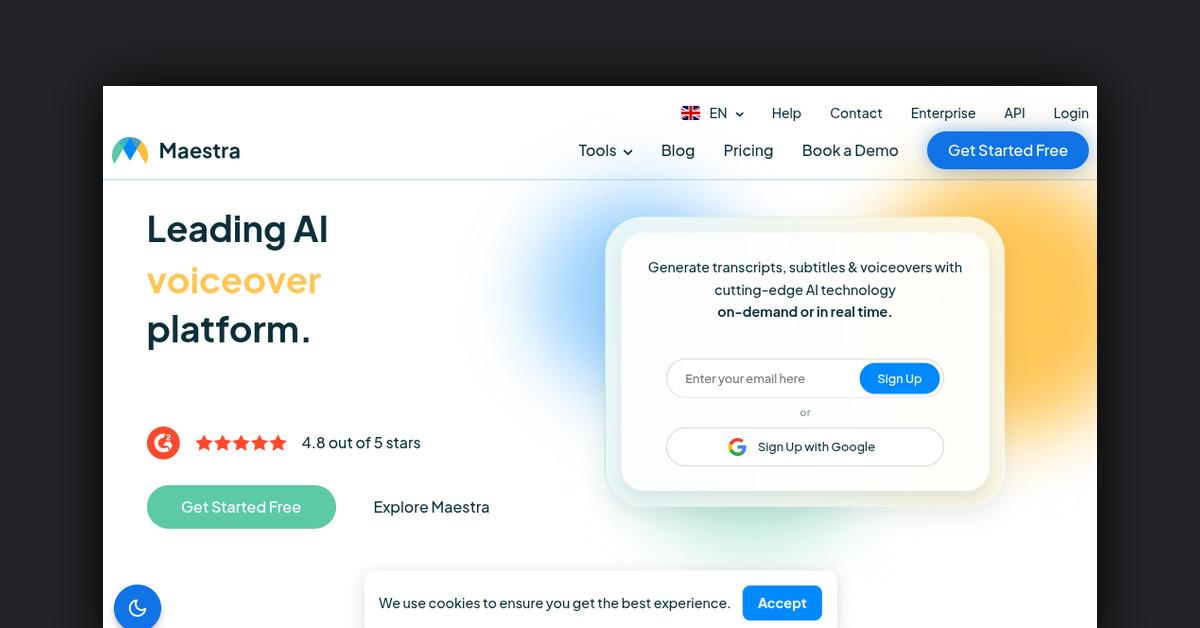
Maestra is an advanced AI-driven platform designed for transcription and real-time translation, making it a leading choice for businesses and individuals seeking to enhance their content’s accessibility and reach. It offers a suite of tools for generating transcripts, subtitles, and voiceovers, using cutting-edge AI technology either on-demand or in real-time.
How Does Maestra Work?
Maestra leverages sophisticated AI algorithms to automate the transcription and translation process. Users simply upload their audio or video files, and Maestra processes these files to produce accurate transcriptions and translations in a matter of seconds. This automation not only saves time but also ensures consistency and precision in the output.
Comprehensive Features, Functionalities, and Benefits of Maestra
Maestra comes packed with a variety of features that cater to diverse needs, whether for transcription, translation, or voiceover generation. Here are some notable features and benefits:
- Multi-Language Transcription and Translation: Transcribe and translate content into over 125 languages, expanding reach and accessibility.
- Subtitles and Captions: Instantly generate subtitles to enhance video accessibility and engagement.
- Voiceovers and Dubbing: Use AI-driven voice synthesis to create natural-sounding voiceovers in multiple languages.
- AI-Driven Enhancements: Perform sentiment analysis, keyword extraction, and content summarization to enhance SEO and content clarity.
- Collaborative Tools: Manage projects with teams using centralized workspaces and real-time collaboration features.
- API Access: Integrate Maestra’s functionalities into existing workflows through a robust API, allowing seamless integration with other tools and platforms.
Use Cases and Applications of Maestra
Maestra’s versatile features make it suitable for a wide range of applications across different industries:
- Education: Enhance learning materials with transcriptions and translations, making them accessible to a global audience.
- Corporate: Facilitate communication and collaboration with real-time transcription and translation during meetings and conferences.
- Media and Entertainment: Create multilingual content with subtitles and voiceovers, reaching diverse audiences.
- Healthcare: Improve patient communication with real-time translation and transcription services.
Who Can Benefit from Maestra?
Maestra serves a broad audience, including:
- Content Creators: Enhance video content with subtitles and voiceovers to engage a wider audience.
- Educational Institutions: Provide accessible learning materials to students worldwide.
- Businesses: Streamline communication in multilingual environments and enhance the global reach of corporate content.
- Non-Profit Organizations: Utilize transcription and translation services to communicate effectively with diverse communities.
Plans and Pricing Details
Maestra offers a range of plans to cater to different needs and budgets:
- Pay As You Go: $12 per 60 credits for transcription or subtitle services.
- Lite Plan: $23 per month (billed annually) for 180 minutes of transcription.
- Basic Plan: $39 per month (billed annually) for 360 minutes of service, including AI summary and custom dictionary.
- Premium Plan: $79 per month (billed annually) for 900 minutes, with additional features like Maestra Teams and API access.
- Enterprise Plan: Custom pricing with additional benefits like live event captioning and custom development.
Support Options Available with Maestra
Maestra provides support for its users through various channels to ensure a seamless experience. They offer priority support for premium users and facilitate collaboration through Maestra Teams, where users can manage projects and share files effortlessly.
Integration Capabilities of Maestra
Maestra integrates with popular platforms such as YouTube, TikTok, Slack, Zoom, OBS, and vMix, allowing users to leverage Maestra’s transcription and translation capabilities seamlessly across these platforms.
Availability of Maestra API
Maestra offers API access, enabling users to integrate its transcription, translation, and dubbing functionalities directly into their applications and workflows. This feature is particularly beneficial for enterprises seeking to enhance their operational efficiency and content accessibility.
Customer Reviews and Feedback
Maestra has received positive feedback from its users, with a rating of 4.8 out of 5 stars on G2. It is trusted by renowned companies like HP, Walmart, Amazon, Bayer, Meta, NHS, Dell, and Deloitte, highlighting its reliability and effectiveness in delivering quality transcription and translation services.
Frequently Asked Questions
Is there a student/teacher/non-profit discount? Yes, there is a 20% discount for students, teachers, and non-profit organizations.
Can I access Maestra after canceling my subscription? Yes, users can still access their files and certain features even after cancelation.
What payment methods are accepted? Maestra accepts credit/debit cards from major providers like Visa, Mastercard, and American Express.
Useful Links and Resources
- Maestra Official Website
- Maestra API Documentation
- Maestra Blog for insights and updates on transcription and translation technology.
Maestra stands out as a powerful tool for anyone looking to enhance their content’s accessibility and reach through advanced transcription and translation capabilities. Whether for individual or enterprise use, Maestra provides a comprehensive solution tailored to meet diverse needs in the digital content landscape.
Last Updated: