

Takeaways
- Voicery offered customizable, human-like text-to-speech solutions for businesses.
- Their technology was known for creating voices tailored to specific emotional nuances and accents.
- Features included flexible deployment options, real-time audio streaming, and SSML markup for detailed audio adjustments.
- Voicery's applications spanned industries like automotive, voice assistants, call centers, and audiobooks.
- Despite its shutdown, Voicery's innovative approach left a lasting impact on AI-driven voice solutions.
Overview of Voicery Text-to-Speech
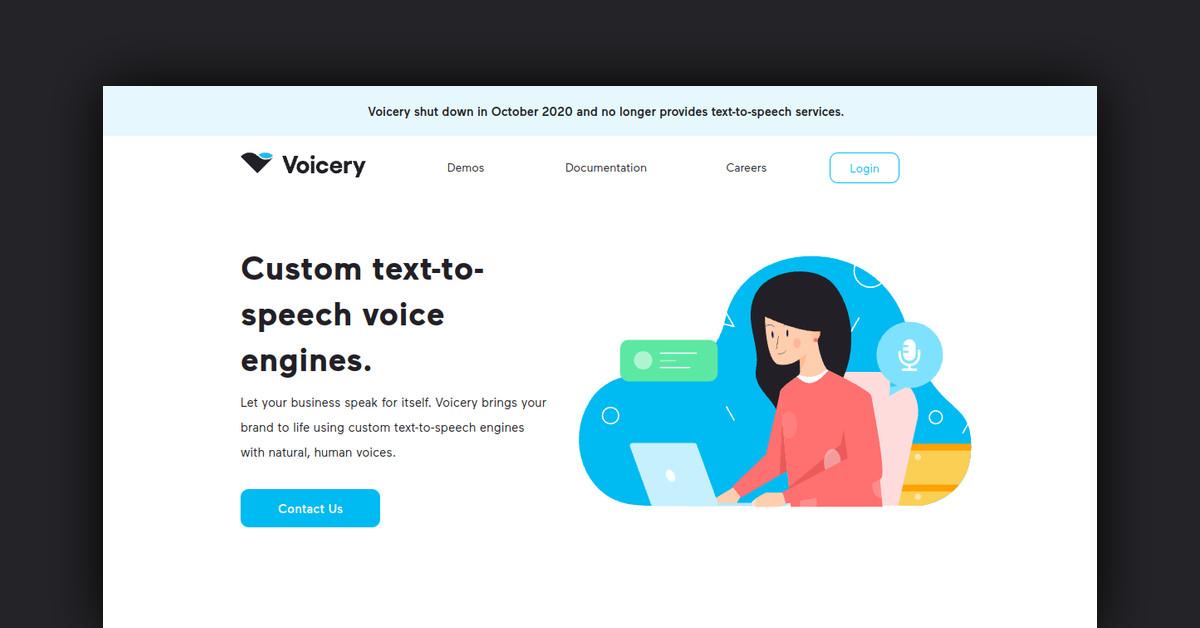
Voicery was a pioneering service in the realm of text-to-speech technology, offering businesses the ability to create custom voice solutions. Their technology was designed to provide natural, human-like voices that could enhance customer interaction. Although Voicery shut down in October 2020, their approach to voice synthesis left a mark on the industry.
How Voicery's Text-to-Speech Worked
Voicery's process for creating custom voices was comprehensive and tailored to each client's needs. The workflow included several key stages:
-
Discovery: Voicery collaborated with clients to determine the desired voice characteristics, such as language, tone, and emotional nuances.
-
Record: The team managed everything from selecting voice talent and scripts to studio recordings and audio processing.
-
Launch: The final voice was deployed on various platforms, ensuring seamless integration with existing systems like speech recognition and dialogue systems.
Features, Functionalities, and Benefits of Voicery
Voicery's platform was built on advanced neural speech synthesis technology. Some notable features included:
-
Custom Voices: Tailored to specific accents and emotions using AI and deep learning.
-
Flexible Deployment: Options for cloud, on-premise, offline, or hybrid setups.
-
Real-Time Audio: Streaming capabilities enabled immediate audio delivery.
-
SSML Markup: Allowed for detailed audio adjustments.
-
Seamless Integration: Synthesized content could be embedded in pre-recorded audio.
Use Cases and Potential Applications
Voicery's technology was versatile, serving numerous industries:
-
Automotive: Enhanced in-vehicle voice technology for smoother travel experiences.
-
Voice Assistants: Improved interaction capabilities across various locations.
-
Call Centers: Streamlined customer service with voice-powered solutions.
-
Audiobooks: Enabled high-quality narration for long-form media like audiobooks and podcasts.
Who Was Voicery For?
Voicery catered to businesses that valued quality customer interactions and desired a unique brand voice. Industries ranging from automotive to media production found their solutions beneficial for improving user engagement and service delivery.
Plans and Pricing
Voicery offered a flexible pricing model to accommodate different needs:
-
Starter Plan: Priced at $0.001 per character, providing access to a library of voices and up to 100 requests per second.
-
Enterprise Plan: Included bulk discounts, custom voices, on-device synthesis SDK, and unlimited requests.
Available Support and Integrations
Before its closure, Voicery provided extensive documentation and API support. They offered integration capabilities with standard HTTP requests, allowing developers to leverage their technology seamlessly.
API Availability
Voicery's API was a robust tool that supported SSML and provided JSON-encoded audio outputs. Authentication was handled via API keys, ensuring secure access for developers.
Despite its shutdown, Voicery's innovative approach to text-to-speech technology remains influential, demonstrating the potential of AI-driven voice solutions in enhancing digital communication.
Last Updated: